
Services
Country Profiling
SEARCH provides country profiles for South East Asian countries. Profiles cover the social, economic and political environments in each country. Specific interest areas for clients can be targeted where required.
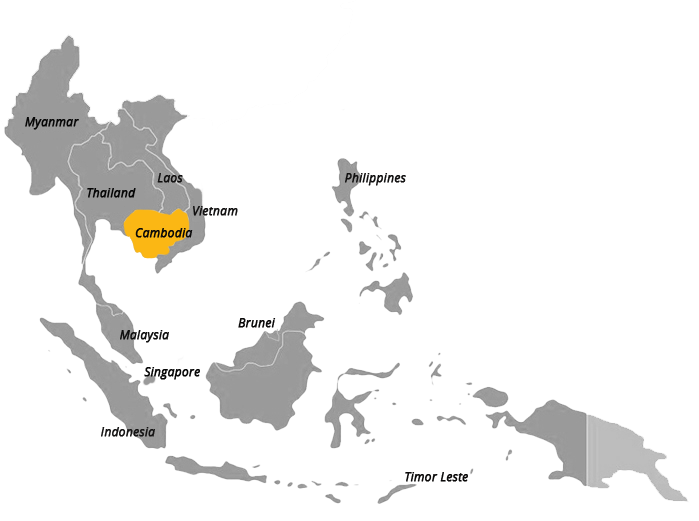
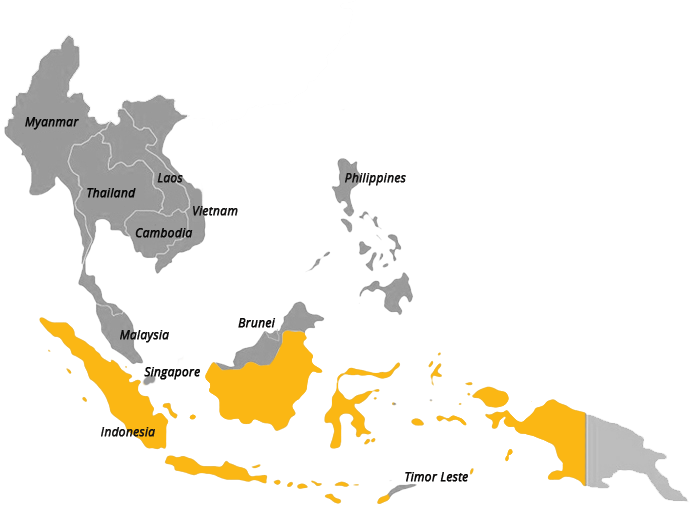
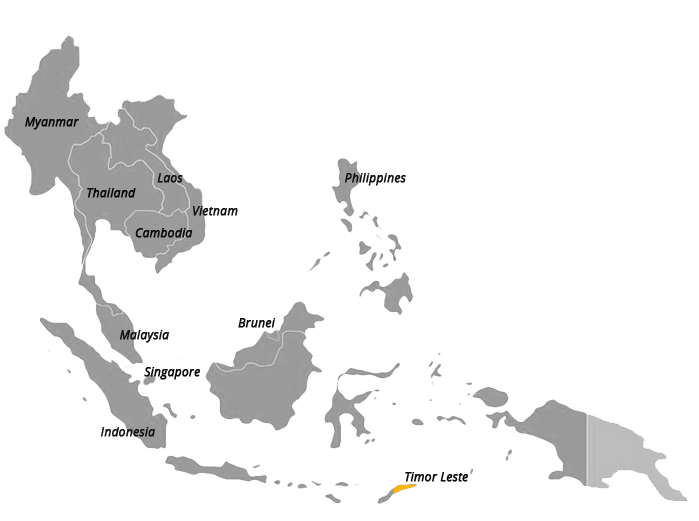
Fast Facts
| Population | 15,205,539 (July 2013 est.) |
| Population Growth Rate | 1.67% (2013 est.) |
| Median Age | Total 23.7 yrs; Male 23 yrs; Female 24.4 yrs (2013 est.) |
| Birth Rate | 24.88 births/1,000 population (2013 est.) |
| Death Rate | 7.88 deaths/1,000 population (2013 est.) |
| Life Expectancy at Birth, Female (years) | 64.41 (2011) |
| Life Expectancy at Birth, Male (years) | 61.61 (2011) |
| Ethnic Groups | Khmer 90%, Vietnamese 5%, Chinese 1%, other 4% |
| Religions | Buddhist (official) 96.4%, Muslim 2.1%, other 1.3%, unspecified 0.2% (1998 census) |
| Area | 181,035 sq km; Land 176,515 sq km; Water 4,520 sq km |
| Natural Resources | oil and gas, timber, gemstones, iron ore, manganese, phosphates, hydropower potential |
| Current Environmental Issues | Illegal logging; strip mining for gems; soil erosion; no access to potable water for rural communities; declining fish stocks |
| Urbanization | Urban population 20% of total population (2011) |
| Rate of Urbanization | 2.13% annual rate of change (2010-15 est.) |
| Capital | Phnom Penh 1.55 million (2011) |
| Government | Multiparty democracy under a constitutional monarchy |
| Legal System | Civil law system, customary law, Communist legal theory, and common law |
| Chief of State | King Norodom Sihamoni (since 29 October 2004) |
| Head of Government | Prime Minister Hun Sen (since 14 January 1985) |
| GDP (Purchasing Power Parity) | $37.25 billion (2012 est.) |
| GDP (Real Growth Rate) | 6.5% (2012 est.) |
| GDP (per Capita PPP) | $2,400 (2012 est.) |
| Inflation Rate (consumer prices) | 2.9% (2012 est.) |
| Health Expenditure | 5.6% of GDP (2010) |
| Education Expenditure | 2.6% of GDP (2010) |
| Military Expenditure | 2.4% of GDP (2012) |
| Public Debt | 28.6% GDP (2011) |
| Literacy (defined as age 15 and over who can read and write) | 73.9% (2009) |
| Population Below the Poverty Line | 20% (2012 est.) |
| World Press Feedom Index 2013 (rank out of 179) | 143 |
| Transparency International Corruption Perceptions Index 2012 (rank out of 174) | 157 |
| Access to Electricity (% of population) | 31.1 |
| Time required to build a warehouse (days) | 652 (2012) |
| Time required to enforce a contract (days) | 401 (2012) |
| Time required to get electricity (days) | 183 (2012) |
| Time required to start a business (days) | 85 (2012) |
| Time to resolve insolvency (years) | 6 (2012) |
| Business Extent of Disclosure Index (0=less to 10=more disclosure) | 5 (2012) |
| Credit Depth of Information Index (0=low to 6=high) | 3 (2012) |
| The Heritage Foundation Index of Economic Freedom 2013 (rank out of 177) | 95 (Mostly economically unfree) |
| Rule of Law | |
| - Property Rights | 94 |
| - Freedom from Corruption | 161 |
| Limited Government | |
| - Fiscal Freedom | 26 |
| - Government Spending | 18 |
| Regulatory Efficiency | |
| - Business Freedom | 163 |
| - Labour Freedom | 118 |
| - Monetary Freedom | 23 |
| Open Markets | |
| - Trade Freedom | 123 |
| - Investment Freedom | 72 |
| - Financial Freedom | 159 |
Fast Facts
| Population | 251,160,124 (July 2013 est.) |
| Population Growth Rate | 0.99% (2013 est.) |
| Median Age | Total 28.9 yrs; Male 28.4 yrs; Female 29.5 yrs (2013 est.) |
| Birth Rate | 17.38 births/1,000 population (2013 est.) |
| Death Rate | 6.31 deaths/1,000 population (2013 est.) |
| Life Expectancy at Birth, Female (years) | 71.05 (2011) - change values |
| Life Expectancy at Birth, Male (years) | 67.67 (2011) |
| Ethnic Groups |
Javanese 40.6%, Sundanese 15%, Madurese 3.3%, Minangkabau 2.7%, Betawi 2.4%, Bugis 2.4%, Banten 2%, Banjar 1.7%, other or unspecified 29.9% (2000 census) |
| Religions |
Muslim 86.1%, Protestant 5.7%, Roman Catholic 3%, Hindu 1.8%, other or unspecified 3.4% (2000 census) |
| Area |
1,904,569 sq km; Land 1,811,569 sq km; Water 93,000 sq km; Archipelago of 17,508 islands (6,000 inhabited) |
| Natural Resources |
petroleum, tin, natural gas, nickel, timber, bauxite, copper, fertile soils, coal, gold, silver |
| Current Environmental Issues |
deforestation; water pollution from industrial wastes, sewage; air pollution in urban areas; smoke and haze from forest fires |
| Urbanization | Urban population 50.7% of total population (2011) |
| Rate of Urbanization | 2.45% annual rate of change (2010-15 est.) |
| Capital | Jakarta 9.121 million (2011) |
| Government | Republic |
| Legal System | Civil law system based on the Roman-Dutch model, influenced by customary law |
| Chief of State |
President Susilo Bambang Yudhoyono (since 20 October 2004) |
| Head of Government | President Susilo Bambang Yudhoyono (since 20 October 2004) |
| GDP (Purchasing Power Parity) | $1.237 trillion (2012 est.) |
| GDP (Real Growth Rate) | 6.2% (2012 est.) |
| GDP (per Capita PPP) | $5,100 (2012 est.) |
| Inflation Rate (consumer prices) | 2.9% (2012 est.) |
| Health Expenditure | 2.6% of GDP (2010) |
| Education Expenditure | 3.0% of GDP (2010) |
| Military Expenditure | 0.9% of GDP (2012) |
| Public Debt | 25.0% GDP (2011) |
| Literacy (defined as age 15 and over who can read and write) | 92.6% (2009) |
| Population Below the Poverty Line | 11.7% (2012 est.) |
| World Press Feedom Index 2013 (rank out of 179) | 139 |
| Transparency International Corruption Perceptions Index 2012 (rank out of 174) | 118 |
| Access to Electricity (% of population) | 73 |
| Time required to build a warehouse (days) | 158 (2012) |
| Time required to enforce a contract (days) | 498 (2012) |
| Time required to get electricity (days) | 108 (2012) |
| Time required to start a business (days) | 47 (2012) |
| Time to resolve insolvency (years) | 5.5 (2012) |
| Business Extent of Disclosure Index (0=less to 10=more disclosure) | 10 (2012) |
| Credit Depth of Information Index (0=low to 6=high) | 4 (2012) |
| The Heritage Foundation Index of Economic Freedom 2013 (rank out of 177) | 108 (Mostly economically unfree) |
| Rule of Law | |
| - Property Rights | 94 |
| - Freedom from Corruption | 98 |
| Limited Government | |
| - Fiscal Freedom | 55 |
| - Government Spending | 14 |
| Regulatory Efficiency | |
| - Business Freedom | 143 |
| - Labour Freedom | 129 |
| - Monetary Freedom | 87 |
| Open Markets | |
| - Trade Freedom | 97 |
| - Investment Freedom | 128 |
| - Financial Freedom | 69 |
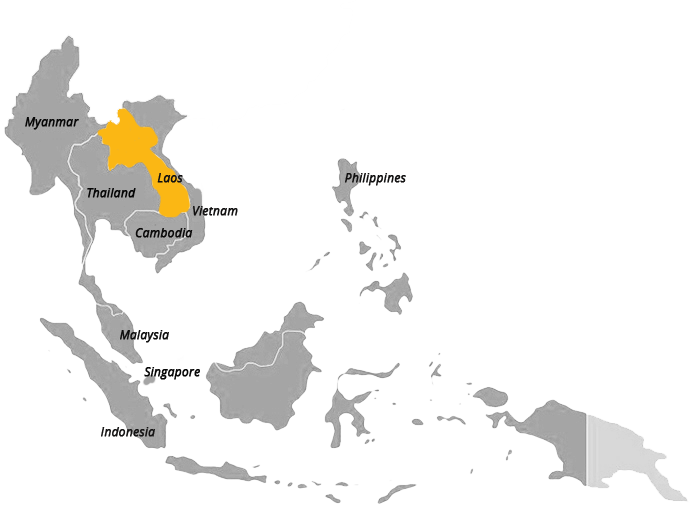
Fast Facts
| Population | 6,695,166 (July 2013 est.) |
| Population Growth Rate | 1.63% (2013 est.) |
| Median Age | Total 21.6 yrs; Male 21.4 yrs; Female 21.9 yrs (2013 est.) |
| Birth Rate | 25.23 births/1,000 population (2013 est.) |
| Death Rate | 7.86 deaths/1,000 population (2013 est.) |
| Life Expectancy at Birth, Female (years) | 68.89 (2011) |
| Life Expectancy at Birth, Male (years) | 66.05 (2011) |
| Ethnic Groups |
Lao 55%, Khmou 11%, Hmong 8%, other (over 100 minor ethnic groups) 26% (2005 census) |
| Religions |
Buddhist 67%, Christian 1.5%, other and unspecified 31.5% (2005 census) |
| Area | 236,800 sq km; Land 230,800 sq km; Water 6,000 sq km |
| Natural Resources | timber, hydropower, gypsum, tin, gold, gemstones |
| Current Environmental Issues |
unexploded ordnance; deforestation; soil erosion; most of the population does not have access to potable water |
| Urbanization | Urban population 34.3% of total population (2011) |
| Rate of Urbanization | 4.41% annual rate of change (2010-15 est.) |
| Capital | Vientiane 799,000 (2009) |
| Government | Communist state |
| Legal System | Civil law system, customary law, Communist legal theory, and common law |
| Chief of State |
President Lt. Gen. Choummali Saignason (since 8 June 2006) |
| Head of Government |
Prime Minister Thongsing Thammavong (since 24 December 2010) |
| GDP (Purchasing Power Parity) | $19.52 billion (2012 est.) |
| GDP (Real Growth Rate) | 8.3% (2012 est.) |
| GDP (per Capita PPP) | $3,100 (2012 est.) |
| Inflation Rate (consumer prices) | 4.3% (2012 est.) |
| Health Expenditure | 4.5% of GDP (2010) |
| Education Expenditure | 3.3% of GDP (2010) |
| Military Expenditure | 0.2% of GDP (2012) |
| Public Debt | 57.4% GDP (2011) |
| Literacy (defined as age 15 and over who can read and write) | 72.7% (2009) |
| Population Below the Poverty Line | 26% (2012 est.) |
| World Press Feedom Index 2013 (rank out of 179) | 168 |
| Transparency International Corruption Perceptions Index 2012 (rank out of 174) | 160 |
| Access to Electricity (% of population) | 63 |
| Time required to build a warehouse (days) | 108 (2012) |
| Time required to enforce a contract (days) | 443 (2012) |
| Time required to get electricity (days) | 134 (2012) |
| Time required to start a business (days) | 92 (2012) |
| Time to resolve insolvency (years) | NA (2012) |
| Business Extent of Disclosure Index (0=less to 10=more disclosure) | 10 (2012) |
| Credit Depth of Information Index (0=low to 6=high) | 0 (2012) |
| The Heritage Foundation Index of Economic Freedom 2013 (rank out of 177) | 144 (Mostly economically unfree) |
| Rule of Law | |
| - Property Rights | 158 |
| - Freedom from Corruption | 151 |
| Limited Government | |
| - Fiscal Freedom | 82 |
| - Government Spending | 22 |
| Regulatory Efficiency | |
| - Business Freedom | 101 |
| - Labour Freedom | 114 |
| - Monetary Freedom | 116 |
| Open Markets | |
| - Trade Freedom | 162 |
| - Investment Freedom | 140 |
| - Financial Freedom | 159 |
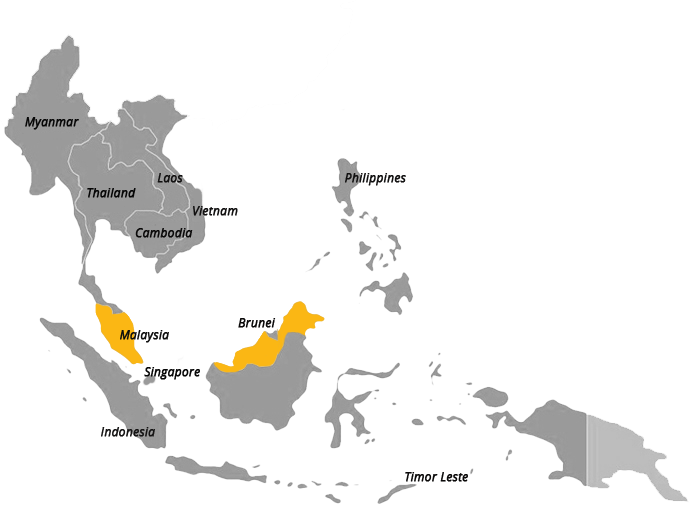
Fast Facts
| Population | 29,628,392 (July 2013 est.) |
| Population Growth Rate | 1.51% (2013 est.) |
| Median Age |
Total 27.4 yrs; Male 27.2 yrs; Female 27.6 yrs (2013 est.) |
| Birth Rate | 20.41 births/1,000 population (2013 est.) |
| Death Rate | 4.97 deaths/1,000 population (2013 est.) |
| Life Expectancy at Birth, Female (years) | 76.51 (2011) |
| Life Expectancy at Birth, Male (years) | 72.11 (2011) |
| Ethnic Groups |
Malay 50.4%, Chinese 23.7%, indigenous 11%, Indian 7.1%, others 7.8% (2004 est.) |
| Religions |
Muslim (official) 60.4%, Buddhist 19.2%, Christian 9.1%, Hindu 6.3%, Confucianism, Taoism, other traditional Chinese religions 2.6%, other or unknown 1.5%, none 0.8% (2000 census) |
| Area |
329,847 sq km, Land 328,657 sq km; Water 1,190 sq km |
| Natural Resources |
tin, petroleum, timber, copper, iron ore, natural gas, bauxite |
| Current Environmental Issues |
air pollution from industrial and vehicular emissions; water pollution from raw sewage; deforestation; smoke/haze from Indonesian forest fires |
| Urbanization | Urban population 72.8% of total population (2011) |
| Rate of Urbanization | 2.49% annual rate of change (2010-15 est.) |
| Capital | Kuala Lumpur 1.493 million (2011) |
| Government | Constitutional monarchy |
| Legal System |
Mixed legal system of English common law, Islamic law, and customary law; judicial review of legislative acts in the Supreme Court at request of supreme head of the federation |
| Chief of State |
King Tuanku Abdul Halim Mu'adzam Shah (selected on 13 December 2011; installed on 11 April 2012) |
| Head of Government |
Prime Minister Mohamed Najib bin Abdul Najib Razak (since 3 April 2009) |
| GDP (Purchasing Power Parity) | $506.7 billion (2012 est.) |
| GDP (Real Growth Rate) | 5.6% (2012 est.) |
| GDP (per Capita PPP) | $17,200 (2012 est.) |
| Inflation Rate (consumer prices) | 1.7% (2012 est.) |
| Health Expenditure | 4.4% of GDP (2010) |
| Education Expenditure | 5.1% of GDP (2010) |
| Military Expenditure | 2.03% of GDP (2012): |
| Public Debt | 52.6% GDP (2011) |
| Literacy (defined as age 15 and over who can read and write) | 93.1% (2009) |
| Population Below the Poverty Line | 3.8% (2012 est.) |
| World Press Feedom Index 2013 (rank out of 179) | 145 |
| Transparency International Corruption Perceptions Index 2012 (rank out of 174) | 54 |
| Access to Electricity (% of population) | 99.4 |
| Time required to build a warehouse (days) | 140 (2012) |
| Time required to enforce a contract (days) | 425 (2012) |
| Time required to get electricity (days) | 46 (2012) |
| Time required to start a business (days) | 6 (2012) |
| Time to resolve insolvency (years) | 1.5 (2012) |
| Business Extent of Disclosure Index (0=less to 10=more disclosure) | 10 (2012) |
| Credit Depth of Information Index (0=low to 6=high) | 6 (2012) |
| The Heritage Foundation Index of Economic Freedom 2013 (rank out of 177) | 56 (Moderately economically unfree) |
| Rule of Law | |
| - Property Rights | 50 |
| - Freedom from Corruption | 58 |
| Limited Government | |
| - Fiscal Freedom | 47 |
| - Government Spending | 68 |
| Regulatory Efficiency | |
| - Business Freedom | 35 |
| - Labour Freedom | 48 |
| - Monetary Freedom | 39 |
| Open Markets | |
| - Trade Freedom | 88 |
| - Investment Freedom | 111 |
| - Financial Freedom | 69 |
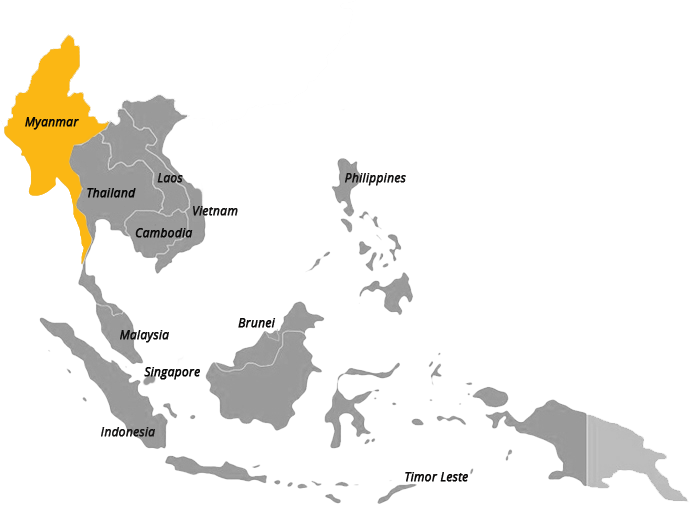
Fast Facts
| Population | 55,167,330 (July 2013 est.) |
| Population Growth Rate | 1.05% (2013 est.) |
| Median Age |
Total 26.7 yrs; Male 27 yrs; Female 28.2 yrs (2013 est.) |
| Birth Rate | 18.89 births/1,000 population (2013 est.) |
| Death Rate | 8.05 deaths/1,000 population (2013 est.) |
| Life Expectancy at Birth, Female (years) | 66.93 (2011) |
| Life Expectancy at Birth, Male (years) | 63.46 (2011) |
| Ethnic Groups |
Burman 68%, Shan 9%, Karen 7%, Rakhine 4%, Chinese 3%, Indian 2%, Mon 2%, other 5% |
| Religions |
Buddhist 89%, Christian 4% (Baptist 3%, Roman Catholic 1%), Muslim 4%, Animist 1%, other 2% |
| Area |
676,578 sq km, Land 653,508 sq km; Water 23,070 sq km |
| Natural Resources |
petroleum, timber, tin, antimony, zinc, copper, tungsten, lead, coal, marble, limestone, precious stones, natural gas, hydropower |
| Current Environmental Issues |
deforestation; industrial pollution of air, soil, and water; inadequate sanitation and water treatment contribute to disease |
| Urbanization | Urban population 20% of total population (2011) |
| Rate of Urbanization | 2.13% annual rate of change (2010-15 est.) |
| Capital | Nay Pyi Taw 992,000 (2009) |
| Government | Parliamentary government |
| Legal System |
Mixed legal system of English common law (as introduced in codifications designed for colonial India) and customary law |
| Chief of State |
President Thein Sein (since 4 February 2011) |
| Head of Government |
President Thein Sein (since 4 February 2011) |
| GDP (Purchasing Power Parity) | $90.93 billion (2012 est.) |
| GDP (Real Growth Rate) | 6.3% (2012 est.) |
| GDP (per Capita PPP) | $1,400 (2012 est.) |
| Inflation Rate (consumer prices) | 1.5% (2012 est.) |
| Health Expenditure | 2% of GDP (2010) |
| Education Expenditure | 0.8% of GDP (2010) |
| Military Expenditure | 4.8% of GDP (2012) |
| Public Debt | 44.3% GDP (2011) |
| Literacy (defined as age 15 and over who can read and write) | 92.3% (2009) |
| Population Below the Poverty Line | 32.7% (2012 est.) |
| World Press Feedom Index 2013 (rank out of 179) | 151 |
| Transparency International Corruption Perceptions Index 2012 (rank out of 174) | 172 |
| Access to Electricity (% of population) | 48.8 |
| Time required to build a warehouse (days) | NA (2012) |
| Time required to enforce a contract (days) | NA (2012) |
| Time required to get electricity (days) | NA (2012) |
| Time required to start a business (days) | NA (2012) |
| Time to resolve insolvency (years) | NA (2012) |
| Business Extent of Disclosure Index (0=less to 10=more disclosure) | NA (2012) |
| Credit Depth of Information Index (0=low to 6=high) | NA (2012) |
| The Heritage Foundation Index of Economic Freedom 2013 (rank out of 177) | 172 (Economically repressed) |
| Rule of Law | |
| - Property Rights | 165 |
| - Freedom from Corruption | 175 |
| Limited Government | |
| - Fiscal Freedom | 64 |
| - Government Spending | 1 |
| Regulatory Efficiency | |
| - Business Freedom | 174 |
| - Labour Freedom | 175 |
| - Monetary Freedom | 162 |
| Open Markets | |
| - Trade Freedom | 105 |
| - Investment Freedom | 170 |
| - Financial Freedom | 170 |
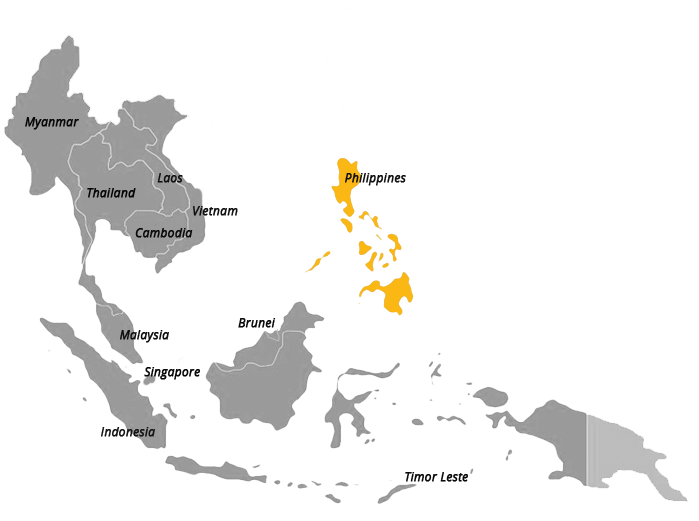
Fast Facts
| Population | 105,720,644 (July 2013 est.) |
| Population Growth Rate | 1.84% (2013 est.) |
| Median Age |
Total 23.3 yrs; Male 22.8 yrs; Female 23.8 yrs (2013 est.) |
| Birth Rate | 24.62 births/1,000 population (2013 est.) |
| Death Rate | 4.95 deaths/1,000 population (2013 est.) |
| Life Expectancy at Birth, Female (years) | 72.17 (2011) |
| Life Expectancy at Birth, Male (years) | 65.51 (2011) |
| Ethnic Groups |
Tagalog 28.1%, Cebuano 13.1%, Ilocano 9%, Bisaya/Binisaya 7.6%, Hiligaynon Ilonggo 7.5%, Bikol 6%, Waray 3.4%, other 25.3% (2000 census) |
| Religions |
Catholic 82.9% (Roman Catholic 80.9%, Aglipayan 2%), Muslim 5%, Evangelical 2.8%, Iglesia ni Kristo 2.3%, other Christian 4.5%, other 1.8%, unspecified 0.6%, none 0.1% (2000 census) |
| Area |
300,000 sq km, Land 298,170 sq km; Water 1,830 sq km |
| Natural Resources |
timber, petroleum, nickel, cobalt, silver, gold, salt, copper |
| Current Environmental Issues |
deforestation in watershed areas; soil erosion; air and water pollution in major urban centers; coral reef degradation; pollution of mangrove swamps |
| Urbanization | Urban population 48.8% of total population (2011) |
| Rate of Urbanization | 2.16% annual rate of change (2010-15 est.) |
| Capital | Manilla 11.449 million (2011) |
| Government | Republic |
| Legal System |
Mixed legal system of civil, common, Islamic, and customary law |
| Chief of State |
President Benigno Aquino (since 30 June 2010) |
| Head of Government | President Benigno Aquino (since 30 June 2010) |
| GDP (Purchasing Power Parity) | $431.3 billion (2012 est.) |
| GDP (Real Growth Rate) | 6.6% (2012 est.) |
| GDP (per Capita PPP) | $4,500 (2012 est.) |
| Inflation Rate (consumer prices) | 3.1% (2012 est.) |
| Health Expenditure | 3.6% of GDP (2010) |
| Education Expenditure | 2.7% of GDP (2010) |
| Military Expenditure | 0.9% of GDP (2012) |
| Public Debt | 40.5% GDP (2011) |
| Literacy (defined as age 15 and over who can read and write) | 95.4% (2008 est.) |
| Population Below the Poverty Line | 26.5% (2009 est.) |
| World Press Feedom Index 2013 (rank out of 179) | 147 |
| Transparency International Corruption Perceptions Index 2012 (rank out of 174) | 105 |
| Access to Electricity (% of population) | 83.3 |
| Time required to build a warehouse (days) | 84 (2012) |
| Time required to enforce a contract (days) | 842 (2012) |
| Time required to get electricity (days) | 50 (2012) |
| Time required to start a business (days) | 36 (2012) |
| Time to resolve insolvency (years) | 5.7 (2012) |
| Business Extent of Disclosure Index (0=less to 10=more disclosure) | 2 (2012) |
| Credit Depth of Information Index (0=low to 6=high) | 3 (2012) |
| The Heritage Foundation Index of Economic Freedom 2013 (rank out of 177) | 97 (Mostly economically unfree) |
| Rule of Law | |
| - Property Rights | 94 |
| - Freedom from Corruption | 127 |
| Limited Government | |
| - Fiscal Freedom | 88 |
| - Government Spending | 10 |
| Regulatory Efficiency | |
| - Business Freedom | 135 |
| - Labour Freedom | 128 |
| - Monetary Freedom | 73 |
| Open Markets | |
| - Trade Freedom | 93 |
| - Investment Freedom | 98 |
| - Financial Freedom | 69 |
Fast Facts
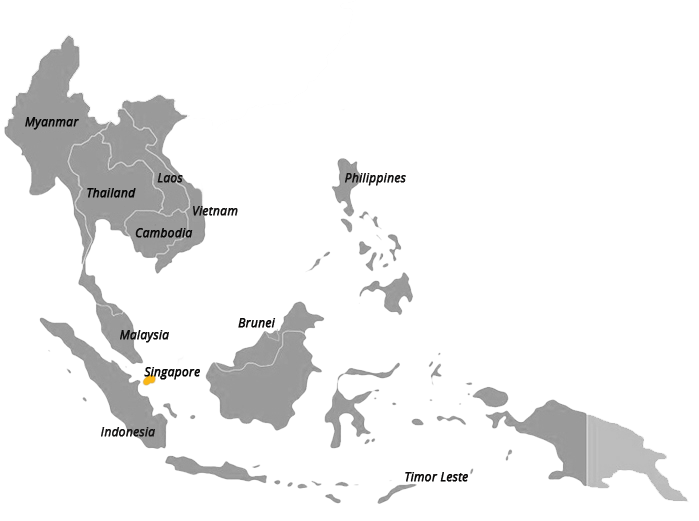
| Population | 5,460,302 (July 2013 est.) |
| Population Growth Rate | 1.96% (2013 est.) |
| Median Age |
Total 33.6 yrs; Male 33.5 yrs; Female 33.7 yrs (2013 est.) |
| Birth Rate | 7.91 births/1,000 population (2013 est.) |
| Death Rate | 3.41 deaths/1,000 population (2013 est.) |
| Life Expectancy at Birth, Female (years) | 84.3 (2011) |
| Life Expectancy at Birth, Male (years) | 79.6 (2011) |
| Ethnic Groups |
Chinese 76.8%, Malay 13.9%, Indian 7.9%, other 1.4% (2000 census) |
| Religions |
Buddhist 42.5%, Muslim 14.9%, Taoist 8.5%, Hindu 4%, Catholic 4.8%, other Christian 9.8%, other 0.7%, none 14.8% (2000 census) |
| Area |
697 sq km, Land 687 sq km; Water 10 sq km |
| Natural Resources |
fish, deepwater ports |
| Current Environmental Issues |
industrial pollution; limited natural freshwater resources; waste disposal problems; seasonal smoke/haze from forest fires in Indonesia |
| Urbanization | urban population 100% of total population (2011) |
| Rate of Urbanization | 1.1% annual rate of change (2010-15 est.) |
| Capital | Singapore 5.460 million (2011) |
| Government | Parliamentary republic |
| Legal System | English common law |
| Chief of State |
President Tony Tan Keng Yam (since 1 September 2011) |
| Head of Government |
Prime Minister Lee Hsien Loong (since 12 August 2004) |
| GDP (Purchasing Power Parity) | $331.9 billion (2012 est.) |
| GDP (Real Growth Rate) | 1.3% (2012 est.) |
| GDP (per Capita PPP) | $61,400 (2012 est.) |
| Inflation Rate (consumer prices) | 4.6% (2012 est.) |
| Health Expenditure | 4% of GDP (2010) |
| Education Expenditure | 3.3% of GDP (2010) |
| Military Expenditure | 3.6% of GDP (2012) |
| Public Debt | 100.8% GDP (2011) |
| Literacy (defined as age 15 and over who can read and write) | 95.9% (2010) |
| Population Below the Poverty Line | NA% (2012 est.) |
| World Press Feedom Index 2013 (rank out of 179) | 149 |
| Transparency International Corruption Perceptions Index 2012 (rank out of 174) | 5 |
| Access to Electricity (% of population) | 100 |
| Time required to build a warehouse (days) | 26 (2012) |
| Time required to enforce a contract (days) | 150 (2012) |
| Time required to get electricity (days) | 36 (2012) |
| Time required to start a business (days) | 3 (2012) |
| Time to resolve insolvency (years) | 0.8 (2012) |
| Business Extent of Disclosure Index (0=less to 10=more disclosure) | 10 (2012) |
| Credit Depth of Information Index (0=low to 6=high) | 4 (2012) |
| The Heritage Foundation Index of Economic Freedom 2013 (rank out of 177) | 2 (Economically free) |
| Rule of Law | |
| - Property Rights | 2 |
| - Freedom from Corruption | 5 |
| Limited Government | |
| - Fiscal Freedom | 25 |
| - Government Spending | 9 |
| Regulatory Efficiency | |
| - Business Freedom | 4 |
| - Labour Freedom | 2 |
| - Monetary Freedom | 18 |
| Open Markets | |
| - Trade Freedom | 1 |
| - Investment Freedom | 27 |
| - Financial Freedom | 4 |
Fast Facts
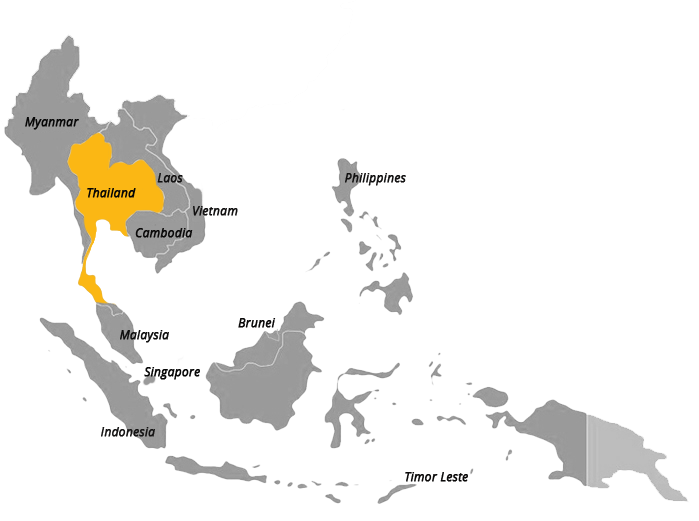
| Population | 67,448,120 (July 2013 est.) |
| Population Growth Rate | 0.52% (2013 est.) |
| Median Age |
Total 35.1 yrs; Male 34.2 yrs; Female 36.1 yrs (2013 est.) |
| Birth Rate | 12.66 births/1,000 population (2013 est.) |
| Death Rate | 7.47 deaths/1,000 population (2013 est.) |
| Life Expectancy at Birth, Female (years) | 77.53 (2011) |
| Life Expectancy at Birth, Male (years) | 70.82 (2011) |
| Ethnic Groups |
Thai 75%, Chinese 14%, other 11% |
| Religions |
Buddhist (official) 94.6%, Muslim 4.6%, Christian 0.7%, other 0.1% (2000 census) |
| Area |
513,120 sq km, Land 510,890 sq km; Water 2,230 sq km |
| Natural Resources |
tin, rubber, natural gas, tungsten, tantalum, timber, lead, fish, gypsum, lignite, fluorite, arable land |
| Current Environmental Issues |
vehicle emissions; water pollution; deforestation; soil erosion; wildlife populations threatened by illegal hunting |
| Urbanization | Urban population 34.1% of total population (2011) |
| Rate of Urbanization | 1.6% annual rate of change (2010-15 est.) |
| Capital | Bangkok 6.902 million (2009) |
| Government | Constitutional monarchy |
| Legal System |
Civil law system with common law influences |
| Chief of State |
King Bhumibol Adulyadej (since 9 June 1946) |
| Head of Government |
Prime Minister Yingluck Shinawatra (since 8 August 2011) |
| GDP (Purchasing Power Parity) | $662.6 billion (2012 est.) |
| GDP (Real Growth Rate) | 6.4% (2012 est.) |
| GDP (per Capita PPP) | $10,300 (2012 est.) |
| Inflation Rate (consumer prices) | 3% (2012 est.) |
| Health Expenditure | 3.9% of GDP (2010) |
| Education Expenditure | 3.8% of GDP (2010) |
| Military Expenditure | 1.8% of GDP (2012) |
| Public Debt | 41.7% GDP (2011) |
| Literacy (defined as age 15 and over who can read and write) | 93.5% (2009) |
| Population Below the Poverty Line | 7.8% (2012 est.) |
| World Press Feedom Index 2013 (rank out of 179) | 135 |
| Transparency International Corruption Perceptions Index 2012 (rank out of 174) | 88 |
| Access to Electricity (% of population) | 87.7 |
| Time required to build a warehouse (days) | 157 (2012) |
| Time required to enforce a contract (days) | 440 (2012) |
| Time required to get electricity (days) | 35 (2012) |
| Time required to start a business (days) | 29 (2012) |
| Time to resolve insolvency (years) | 2.7 (2012) |
| Business Extent of Disclosure Index (0=less to 10=more disclosure) | 10 (2012) |
| Credit Depth of Information Index (0=low to 6=high) | 5 (2012) |
| The Heritage Foundation Index of Economic Freedom 2013 (rank out of 177) | 61 (Moderately economically unfree) |
| Rule of Law | |
| - Property Rights | 68 |
| - Freedom from Corruption | 78 |
| Limited Government | |
| - Fiscal Freedom | 89 |
| - Government Spending | 31 |
| Regulatory Efficiency | |
| - Business Freedom | 58 |
| - Labour Freedom | 47 |
| - Monetary Freedom | 145 |
| Open Markets | |
| - Trade Freedom | 96 |
| - Investment Freedom | 119 |
| - Financial Freedom | 17 |
Fast Facts
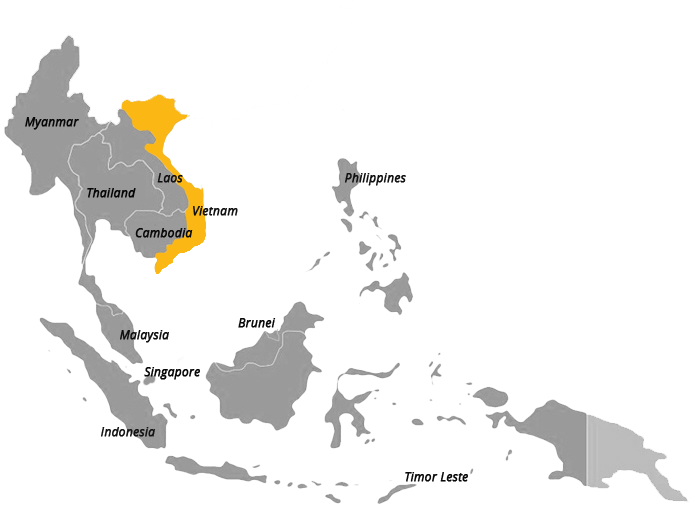
| Population | 92,477,857 (July 2013 est.) |
| Population Growth Rate | 1.03% (2013 est.) |
| Median Age |
Total 28.7 yrs; Male 27.6 yrs; Female 29.7 yrs (2013 est.) |
| Birth Rate | 16.56 births/1,000 population (2013 est.) |
| Death Rate | 5.94 deaths/1,000 population (2013 est.) |
| Life Expectancy at Birth, Female (years) | 77.09 (2011) |
| Life Expectancy at Birth, Male (years) | 73.11 (2011) |
| Ethnic Groups |
Kinh (Viet) 85.7%, Tay 1.9%, Thai 1.8%, Muong 1.5%, Khmer 1.5%, Mong 1.2%, Nung 1.1%, others 5.3% (1999 census) |
| Religions |
Buddhist 9.3%, Catholic 6.7%, Hoa Hao 1.5%, Cao Dai 1.1%, Protestant 0.5%, Muslim 0.1%, none 80.8% (1999 census) |
| Area |
331,210 sq km, Land 310,070 sq km; Water 21,140 sq km |
| Natural Resources |
phosphates, coal, manganese, rare earth elements, bauxite, chromate, offshore oil and gas deposits, timber, hydropower |
| Current Environmental Issues |
deforestation and soil degradation; water pollution and overfishing; groundwater contamination; Hanoi and Ho Chi Minh City environmental degradation |
| Urbanization | urban population 31% of total population (2011) |
| Rate of Urbanization | 3.03% annual rate of change (2010-15 est.) |
| Capital | Hanoi 2.668 million (2011) |
| Government | Communist state |
| Legal System | Civil law system |
| Chief of State |
President Truong Tan Sang (since 25 July 2011) |
| Head of Government |
Prime Minister Nguyen Tan Dung (since 27 June 2006) |
| GDP (Purchasing Power Parity) | $325.9 billion (2012 est.) |
| GDP (Real Growth Rate) | 5% (2012 est.) |
| GDP (per Capita PPP) | $3,600 (2012 est.) |
| Inflation Rate (consumer prices) | 9.1% (2012 est.) |
| Health Expenditure | 6.8% of GDP (2010) |
| Education Expenditure | 6.6% of GDP (2010) |
| Military Expenditure | 2.5% of GDP (2012) |
| Public Debt | 38% GDP (2011) |
| Literacy (defined as age 15 and over who can read and write) | 93.2% (2010) |
| Population Below the Poverty Line | 11.3% (2012 est.) |
| World Press Feedom Index 2013 (rank out of 179) | 172 |
| Transparency International Corruption Perceptions Index 2012 (rank out of 174) | 123 |
| Access to Electricity (% of population) | 97.6 |
| Time required to build a warehouse (days) | 110 (2012) |
| Time required to enforce a contract (days) | 400 (2012) |
| Time required to get electricity (days) | 115 (2012) |
| Time required to start a business (days) | 34 (2012) |
| Time to resolve insolvency (years) | 5 (2012) |
| Business Extent of Disclosure Index (0=less to 10=more disclosure) | 6 (2012) |
| Credit Depth of Information Index (0=low to 6=high) | 4 (2012) |
| The Heritage Foundation Index of Economic Freedom 2013 (rank out of 177) | 140 (Mostly economically unfree) |
| Rule of Law | |
| - Property Rights | 158 |
| - Freedom from Corruption | 111 |
| Limited Government | |
| - Fiscal Freedom | 110 |
| - Government Spending | 73 |
| Regulatory Efficiency | |
| - Business Freedom | 96 |
| - Labour Freedom | 67 |
| - Monetary Freedom | 161 |
| Open Markets | |
| - Trade Freedom | 77 |
| - Investment Freedom | 164 |
| - Financial Freedom | 130 |
Fast Facts
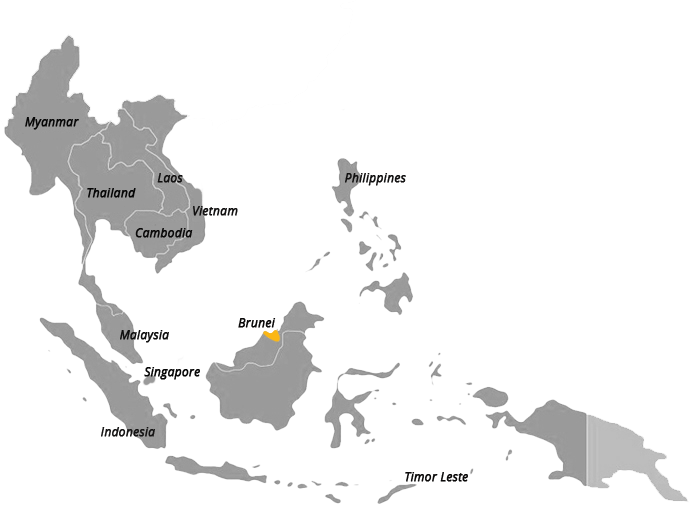
| Population | 415,717 (July 2013 est.) |
| Population Growth Rate | 1.67% (2013 est.) |
| Median Age |
Total 29 yrs; Male 28.7 yrs; Female 29.2 yrs (2013 est.) |
| Birth Rate | 17.63 births/1,000 population (2013 est.) |
| Death Rate | 3.43 deaths/1,000 population (2013 est.) |
| Life Expectancy at Birth, Female (years) | 80.45 (2011) |
| Life Expectancy at Birth, Male (years) | 75.79 (2011) |
| Ethnic Groups |
Malay 66.3%, Chinese 11.2%, indigenous 3.4%, other 19.1% |
| Religions |
Muslim (official) 67%, Buddhist 13%, Christian 10%, other 10% |
| Area |
5,765 sq km; Land 5,265 sq km; Water 500 sq km |
| Natural Resources |
petroleum, natural gas, timber |
| Current Environmental Issues |
Seasonal smoke/haze from forest fires in Indonesia |
| Urbanization | Urban population 76% of total population (2011) |
| Rate of Urbanization | 2.13% annual rate of change (2010-15 est.) |
| Capital | Bandar Seri Begawan 241,000 (2011) |
| Government |
Constitutional sultanate (locally known as Malay Islamic Monarchy) |
| Legal System |
Mixed legal system based on English common law and Islamic law |
|
Chief of State |
Sultan Sir Hassanal Bolkiah (since 5 October 1967) |
| Head of Government | Sultan Sir Hassanal Bolkiah (since 5 October 1967) |
| GDP (Purchasing Power Parity) | $22.04 billion (2012 est.) |
| GDP (Real Growth Rate) | 1.3% (2012 est.) |
| GDP (per Capita PPP) | $55,300 (2012 est.) |
| Inflation Rate (consumer prices) | 0.5% (2012 est.) |
| Health Expenditure | 2.8% of GDP (2010) |
| Education Expenditure | 3.3% of GDP (2010) |
| Military Expenditure | 2.4% of GDP (2012) |
| Public Debt | NA% GDP (2011) |
| Literacy (defined as age 15 and over who can read and write) | 95.4% (2008 est.) |
| Population Below the Poverty Line | NA% (2009 est.) |
| World Press Feedom Index 2013 (rank out of 179) | 122 |
| Transparency International Corruption Perceptions Index 2012 (rank out of 174) | 46 |
| Access to Electricity (% of population) | 99.7 (2010) |
| Time required to build a warehouse (days) | 95 (2012) |
| Time required to enforce a contract (days) | 540 (2012) |
| Time required to get electricity (days) | 56 (2012) |
| Time required to start a business (days) | 101 (2012) |
| Time to resolve insolvency (years) | 2.5 (2012) |
| Business Extent of Disclosure Index (0=less to 10=more disclosure) | 4 (2012) |
| Credit Depth of Information Index (0=low to 6=high) | 0 (2012) |
| The Heritage Foundation Index of Economic Freedom 2013 (rank out of 177) | NR (Not Rated) |
| Rule of Law | |
| - Property Rights | NR |
| - Freedom from Corruption | NR |
| Limited Government | |
| - Fiscal Freedom | NR |
| - Government Spending | NR |
| Regulatory Efficiency | |
| - Business Freedom | NR |
| - Labour Freedom | NR |
| - Monetary Freedom | NR |
| Open Markets | |
| - Trade Freedom | NR |
| - Investment Freedom | NR |
| - Financial Freedom | NR |
Fast Facts
| Population | 1,172,390 (July 2013 est.) |
| Population Growth Rate | 2.47% (2013 est.) |
| Median Age |
Total 18.4 yrs; Male 17.8 yrs; Female 19 yrs (2013 est.) |
| Birth Rate | 34.85 births/1,000 population (2013 est.) |
| Death Rate | 6.28 deaths/1,000 population (2013 est.) |
| Life Expectancy at Birth, Female (years) | 63.45 (2011) |
| Life Expectancy at Birth, Male (years) | 61.5 (2011) |
| Ethnic Groups |
Austronesian (Malayo-Polynesian), Papuan, small Chinese minority |
| Religions |
Roman Catholic 98%, Muslim 1%, Protestant 1% (2005) |
| Area |
14,874 sq km, Land 14,874 sq km; Water 0 sq km |
| Natural Resources |
gold, petroleum, natural gas, manganese, marble |
| Current Environmental Issues |
deforestation and soil erosion |
| Urbanization | Urban population 28.3% of total population (2011) |
| Rate of Urbanization | 4.25% annual rate of change (2010-15 est.) |
| Capital | Dili 166,000 (2009) |
| Government | Republic |
| Legal System |
Civil law system based on the Portuguese model |
| Chief of State |
President Taur Matan Ruak (Jose Maria de Vasconcelos) (since 20 May 2012) |
| Head of Government |
Prime Minister Kay Rala Xanana Gusmao (since 8 August 2007) |
| GDP (Purchasing Power Parity) | $11.23 billion (2012 est.) |
| GDP (Real Growth Rate) | 10% (2012 est.) |
| GDP (per Capita PPP) | $10,000 (2012 est.) |
| Inflation Rate (consumer prices) | 11.8% (2012 est.) |
| Health Expenditure | 9.1% of GDP (2010) |
| Education Expenditure | 10.1% of GDP (2010) |
| Military Expenditure | NA% of GDP (2012) |
| Public Debt | 0.0% GDP (2011) |
| Literacy (defined as age 15 and over who can read and write) | 58.3% (2010) |
| Population Below the Poverty Line | 41% (2009 est.) |
| World Press Feedom Index 2013 (rank out of 179) | 90 |
| Transparency International Corruption Perceptions Index 2012 (rank out of 174) | 113 |
| Access to Electricity (% of population) | 38 (2010) |
| Time required to build a warehouse (days) | 238 (2012) |
| Time required to enforce a contract (days) | 1285 (2012) |
| Time required to get electricity (days) | 63 (2012) |
| Time required to start a business (days) | 94 (2012) |
| Time to resolve insolvency (years) | NA (2012) |
| Business Extent of Disclosure Index (0=less to 10=more disclosure) | 3 (2012) |
| Credit Depth of Information Index (0=low to 6=high) | 3 (2012) |
| The Heritage Foundation Index of Economic Freedom 2013 (rank out of 177) | 166 (Economically repressed) |
| Rule of Law | |
| - Property Rights | 141 |
| - Freedom from Corruption | 140 |
| Limited Government | |
| - Fiscal Freedom | 156 |
| - Government Spending | 172 |
| Regulatory Efficiency | |
| - Business Freedom | 153 |
| - Labour Freedom | 20 |
| - Monetary Freedom | 141 |
| Open Markets | |
| - Trade Freedom | 110 |
| - Investment Freedom | 119 |
| - Financial Freedom | 159 |